
The Container That Was Placed Twice

A routine delivery went wrong in ways no one at the office knew about until after 5pm. The failure wasn't in the work. It was in the structure around it.
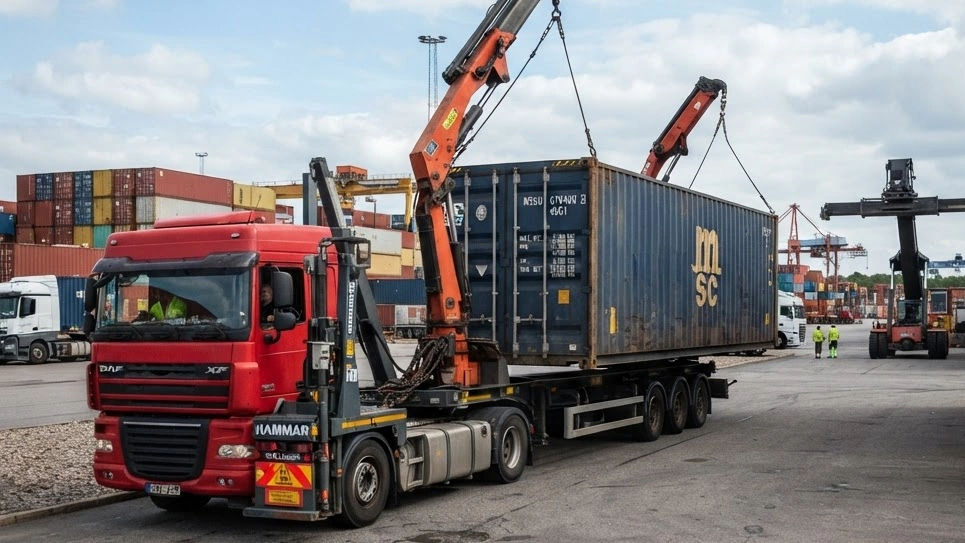
It was after 5pm on a Thursday when Marcus walked back into the office and told the senior manager the container had been delivered. Then came the rest. The container was on the client's site, but its doors faced the opposite way from the south-facing position the client had asked for. No one at the office had known until that moment. By then the day was over, and the container would have to be picked up and repositioned the next morning.
On paper, it had been a routine job: clear a container and deliver it to a client's site. But it was already under pressure. The delivery had slipped past its promised date, each extra day exposed the company to late-booking fees, and the senior manager expected it finished that Thursday. Marcus led the job in the field and was the company's contact with the client. His team lead, Andrea, supervised the work and expected updates through the team's Operations WhatsApp group. She also knew Marcus struggled to communicate, but she gave him room anyway.
The senior manager had indicated where the container should go, and Marcus went with that. No one confirmed it with the client before loading. On arriving at the site, it became clear the container needed to go somewhere else. That was the moment to stop and call the client, and it passed. The left-hand side loader on site could have set the container down with its doors facing south. Instead, it went down facing the other way, and the WhatsApp group stayed quiet. The job was done that Thursday, as expected. It just wasn't done right.
What Actually Failed
Nothing about the work was unusually difficult. What failed was the structure around it, and it failed in three places that fed into one another.
The first was verification. Everyone understood that staff should check details with the client, but that expectation was never tied to fixed points in the job, such as before loading and before setting down. Staff were left to decide for themselves when it applied, and under pressure to finish, it became optional. It was a performance problem, but nothing in the process stood in its way.
The second was how success was defined. Marcus delivered exactly what was expected of him: a finished job that Thursday. No one had ever drawn the line between taking initiative to finish a job and following the client's instruction to finish it. Initiative that overrides the client may close the job, but it fails the client, and the company pays for it. Had the team heard about the problem in time, it would have had a fighting chance to find help and get it right. Silence, it turned out, was not an update.
The third was supervision. Andrea knew Marcus's weakness and chose to give him the benefit of the doubt rather than lead him through the task. With no defined point at which she would step in, he was left to his own devices on the assumption that all would be well.
Building the Structure
The fix starts with making verification part of how the job is done, not a judgement made on the day. The person leading a job confirms the details directly with the client before anything is loaded, down to which way the doors should face, and confirms again on site if the situation has changed. That confirmation is captured in writing, with photos where possible, so the team works from a record rather than a recollection, and any change is shared so the next step is decided together.
Alongside that comes a clearer expectation: problems should surface while there is still time to act on them. Letting time pass until nothing can be done is not a neutral choice, and neither is deciding alone what the client will probably accept. When you don't know, you ask rather than assume. For the team lead, it means managing a known weakness with structure rather than goodwill: documenting it, agreeing on a plan, checking in regularly instead of waiting to be told, and asking specific questions about what, where, when and how when answers come back thin.
After the incident, both Marcus and Andrea proposed standard operating procedures, which was a sensible response. But an SOP describes the behaviour an organisation wants; it does not produce it. The real risk is that the new procedure becomes words in a document while the day-to-day work carries on as before. The question that matters is not only what the procedure says, but where execution actually happens, and who makes sure it does.
The Lesson
This incident wasn't caused by a lack of skill or effort. It was caused by a chain of assumptions: that the information was correct, that finishing the job was enough, and that updates would come. Each was understandable on its own. Together, they left a gap no one was standing in.
The fix is simple to say: don't assume, communicate, follow up. The real work is building the structure that makes those three things happen by default, and making sure it holds.
Comments